

Phone:
Loading
Pakistan is not on an official, publicly disclosed international “blacklist” for all immigration purposes; however, specific countries and institutions perceive Pakistani visa applicants as high-risk, leading to increased scrutiny and restrictions.
In late 2024 and 2025, several UK universities restricted or paused new student intakes from Pakistan due to a sharp rise in student visa refusals and concerns about applicants using the student route to claim asylum.
Within Pakistan, authorities have intensified a crackdown on illegal migration and human trafficking following a tragic boat incident in late 2024. Measures include:
In summary, while Pakistan is not universally blacklisted by international bodies, its citizens face heightened scrutiny and some institutional restrictions when applying for visas, and the Pakistani government itself is taking strong measures to curb illegal migration, including domestic blacklisting of deportees.
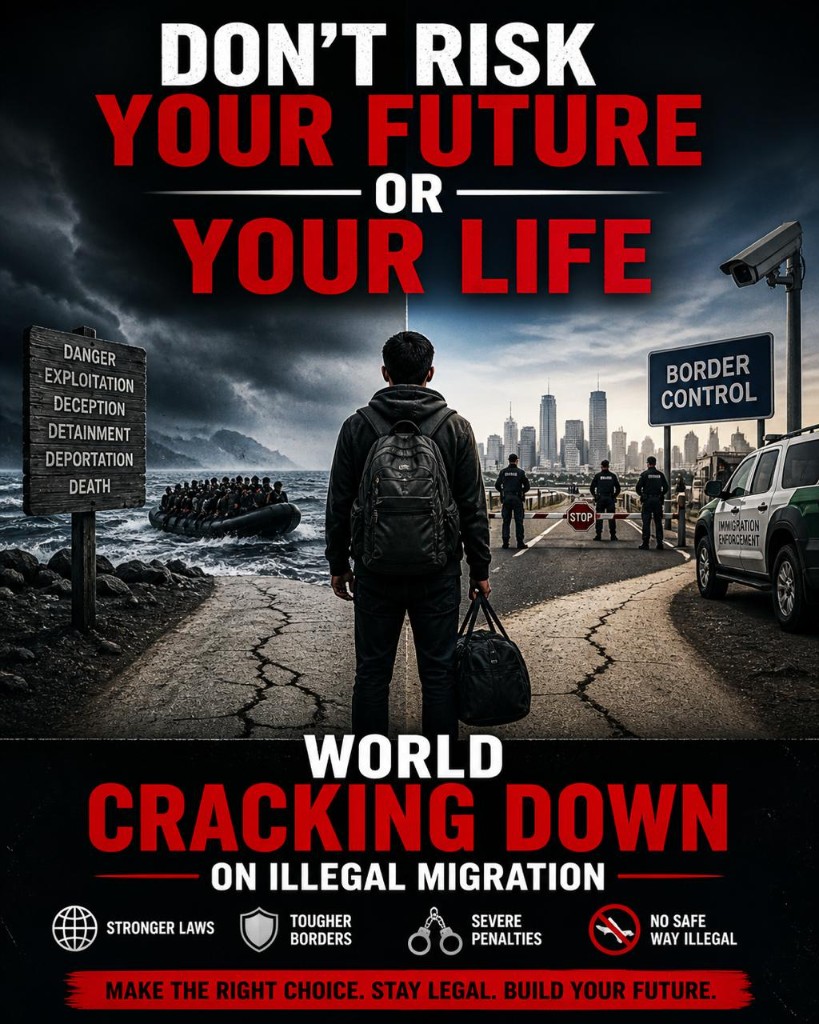
Illegal migration routes to Europe — often falsely marketed as “safe” or “guaranteed” — are among the most dangerous journeys in the world. Recent tragedies involving Pakistani nationals have exposed the true human cost of relying on smugglers and criminal networks rather than lawful immigration pathways.
In early 2024, dozens of Pakistanis lost their lives off the coast of Morocco after being taken on an illegal sea route across the Mediterranean. Similar disasters occurred near Greece in 2023, where hundreds died when overcrowded boats capsized. Many families were left without answers, with loved ones missing or presumed dead.
These journeys are not isolated incidents — they form part of a long-standing pattern of exploitation by organised human smuggling networks operating across multiple countries.
Contrary to common belief, many migrants begin their journey legally. They travel using valid passports and visas to countries such as the UAE, Egypt, Ethiopia or Senegal. From there, smugglers transport them across deserts and coastlines before placing them on unsafe boats bound for Europe. Once this journey begins, migrants are entirely at the mercy of criminal networks, with no legal protection and no guaranteed outcome.
Economic pressure plays a role, but research and government findings show that social pressure and false success stories are often stronger drivers. In many communities, families feel compelled to send relatives to Europe after seeing others appear to prosper abroad — without seeing the hidden risks, debt, trauma or fatalities behind those stories.
In some cases, families pay the equivalent of £9,000–£12,500 to smugglers — money that is frequently lost along with lives.
Authorities in Pakistan and Europe have intensified crackdowns on illegal migration. Tens of thousands of people are now being stopped from leaving Pakistan, and European data shows a sharp decline in undocumented arrivals. Smuggling routes are constantly changing, becoming longer, riskier and more expensive as enforcement tightens.
This means that illegal routes are not becoming easier — they are becoming more dangerous.
Attempting to reach the UK or Europe illegally can result in:
By contrast, lawful immigration routes, when properly assessed and pursued, offer safety, certainty, and long-term security. This includes routes for work, study, family life, protection claims, and human-rights-based applications — all of which must be handled carefully and professionally.
No dream of a better life is worth risking death, exploitation, or permanent exclusion from the UK.
Before taking irreversible steps, individuals should seek professional legal advice from experienced immigration specialists who can:
Making informed, lawful choices saves lives.